

Psychological Evaluations
Evaluations that center the person, not just the diagnosis.
We provide evaluations for ADHD, Autism, Learning Disabilities, and other psychological and developmental concerns for children, adolescents, and adults in Albany, throughout the Capital Region, and the lower Adirondacks.
Our evaluations are comprehensive, collaborative, and centered around the individual and their family. We combine evidence-based assessment tools with clinical expertise and lived experience to better understand the whole person, not just test scores. We take a strengths-based approach while also identifying areas where support may be helpful, with the goal of creating meaningful recommendations and treatment plans to fit each person’s needs, goals, and daily life. Every evaluation is tailored to the individual.
Bridging
evidence-based assessment
with your lived experience
to tell your story.
We provide the following assessment services across the lifespan (early childhood - adulthood):
ADHD Evaluations
Autism Evaluations
Psychoeducational Evaluations (to identify learning disabilities such as dyslexia, and assess academic skills)
Other reasons for evaluation will be considered on a case-by-case basis based on reason for referral and medical necessity.





The Process

Your Questions, Answered
We believe clear expectations and communication is fundamental for effective care. Take a look at the following FAQs to better understand our evaluation process. If you have any other questions about assessments, please reach out at team@threewillowspsych.com
-
Many people come to us because they notice something feels different but aren’t sure what questions to ask. Part of our role is helping you understand what information may be helpful and whether an evaluation is the right next step.
People may seek out a psychological evaluation for a variety of reasons, such as:At the recommendation of a pediatrician, therapist, teacher, or physician
After a screening suggests further assessment may be helpful
When concerns arise at school, work, home, or socially
When patterns have persisted over time without clear explanation
When someone wants a deeper understanding of themselves or their child
At Three Willows, we welcome both professionally referred and self-referred clients, including parents noticing developmental differences in their child and adults exploring possible diagnosis later in life.
-
Goals of evaluation vary, including:
Better understanding of your/your child’s strengths and areas of challenge
Teasing apart complex presentations and diagnoses
Guide therapy, intervention, or treatment planning
Establishing eligibility for school, college, or workplace accommodations
Accessing community, disability, or support services (including OPWDD applications)
Clarifying overlapping developmental, learning, or mental health concerns
Understanding learning style and educational needs
Supporting advocacy and long-term planning
Gaining language and understanding around lived experiences
-
Our evaluations are comprehensive and individualized. Every client begins with an intake appointment where we learn about concerns, developmental history, goals for the evaluation, and relevant background information. From there, we create a testing plan tailored to the referral questions and the individual’s needs.
Depending on the referral, evaluations may include:
Interviews and discussion
Standardized testing
Behavioral observations
Rating scales and questionnaires
Review of records
Collaboration with caregivers, schools, therapists, physicians, or other providers when appropriate
We believe the clearest understanding comes from looking at the whole person across settings and over time, rather than relying on one score or one appointment alone.
-
We approach every evaluation through a respectful, neurodiversity-affirming lens. We recognize that autism, ADHD, learning differences, and other forms of neurodivergence are part of the natural variation in how people think, learn, and experience the world.
Our evaluations are open-ended and data-driven. We consider each person's own experiences alongside information gathered through interviews, standardized measures, observations, records, and other sources to connect the dots and understand the full picture of their strengths, differences, and support needs. We recognize that these differences can present in many ways across individuals and are especially mindful of the experiences of women, gender-diverse individuals, and adults who may be exploring diagnosis later in life after years of feeling misunderstood or overlooked.
Sometimes an evaluation supports a diagnosis, and sometimes it points to other factors that better explain someone's experiences.
Whether or not a formal diagnosis is given, our goal is to provide meaningful insight and practical recommendations to help guide treatment, educational planning, accommodations, and next steps. -
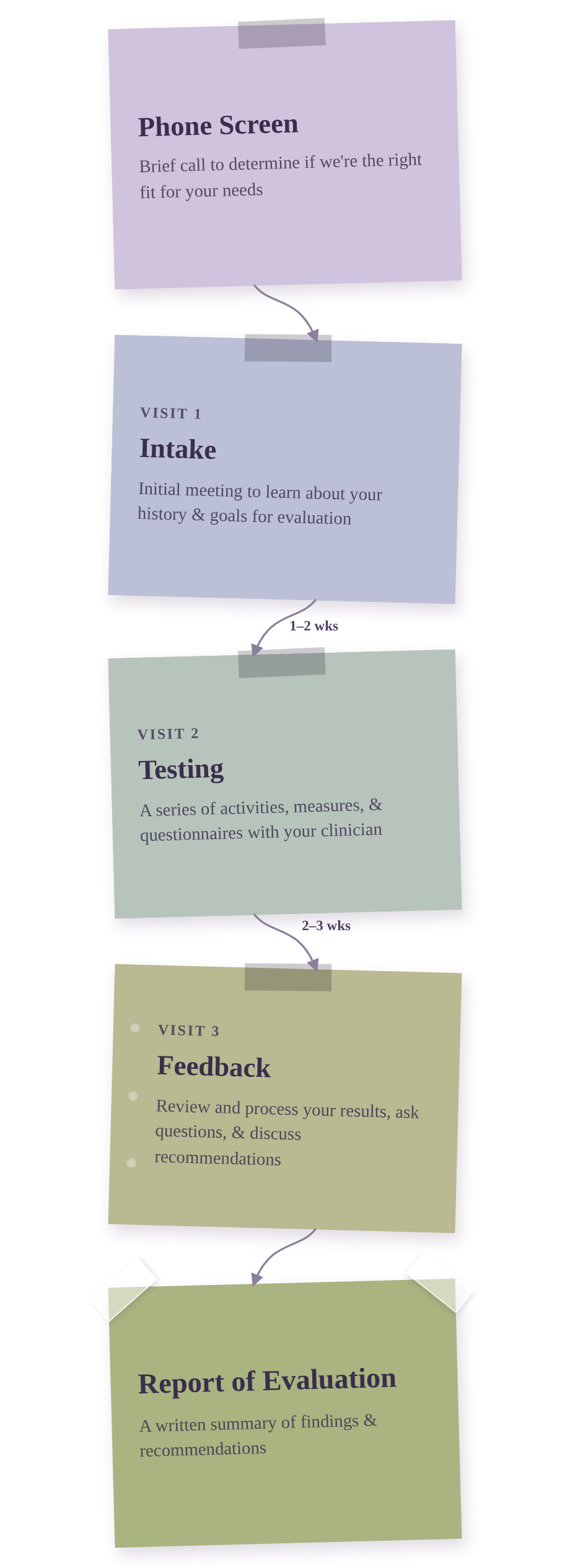
Evaluations typically occur across three visits:
Intake: To learn about you or your child’s history and current needs
Testing: Lengthy appointment(s) to complete formal testing measures and observations.
Feedback session: To discuss findings, recommendations, and process conclusions.
A significant portion of the evaluation process also happens outside of appointments. Your clinician spends time reviewing records, scoring and interpreting measures, integrating information from multiple sources, consulting when needed, and writing a comprehensive report.
Following the feedback session, you will receive a written report summarizing findings, impressions, and recommendations.
-
Developmental disabilities are part of one’s identity throughout life and we are versed in evaluating across the lifespan.
Autism Evaluations (2 years and up)
ADHD Evaluations (4/5 years and up)
Psychoeducational Evaluations beginning when a child enters formal schooling (Kindergarten and up)
Please note, for very young children, especially those ages 3 and under, families are better connected with Early Intervention (EI) or developmental-behavioral pediatrics to ensure necessary collaborative, team-based care.
-
At this time, we do not provide:
Custody, parenting, or forensic evaluations
Immigration evaluations
Employment or fitness-for-duty evaluations
Surgical candidacy evaluations
Evaluations primarily related to traumatic brain injury (TBI)
Dementia or neurocognitive evaluations
Complex neurological evaluations requiring hospital- or team-based neuropsychological care
Bariatric Evaluations
We will also refer out when the primary concern involves active psychosis, severe mental illness requiring higher levels of psychiatric care, or highly specialized assessment needs.
In some cases, other concerns, such as active substance use or significant mood symptoms, may need to be addressed first because they can affect testing results. If so, we'll discuss recommendations for treatment and stabilization before moving forward with the evaluation.
-
We use a range of evidence-based, standardized assessment tools. The specific measures used depend on the referral questions, age, and individual needs of the client.
Common tools include measures of:Intelligence/Cognitive Abilities
Academic Achievement
Trait-based Inventories and Report Forms
Adaptive Functioning
Pragmatic Language
Autism Measures (ADOS-2; MIGDAS-2)
Executive Functioning
Of note, no single test or score determines a diagnosis.
-
We are not board-certified neuropsychologists and will refer out for evaluations examining functioning related to neurological conditions such as stroke, traumatic brain injury, or cognitive decline. These concerns are best evaluated by a neuropsychologist, and we will refer you to appropriate local providers when indicated.
To help clarify different types of services, we may use measures of neuropsychological functioning as part of a broader psychological testing battery. In some cases, services may also be coded by insurance under neuropsychological testing depending on the measures used.
-
No referral is required to schedule an evaluation. We welcome individuals and families who are initiating the process on their own, as well as referrals from physicians, therapists, and other members of your care team.
Many people come to evaluation after time spent researching, reflecting, or making sense of their own experiences. We encourage you to bring any questions, observations, or personal research to your first visit, as this helps us better understand your goals.
We begin with an initial clinical consultation to determine whether psychological testing is appropriate and indicated at this time, and to ensure the evaluation is well-matched to your needs and goals.
-
We offer a hybrid approach to testing.
Intake and feedback appointments are offered via telehealth, if you would prefer.
Testing appointments occur in-person at our Albany office
We complete testing in person whenever possible because it allows our clinicians to directly observe your communication and interaction style in a shared space.
-
Psychological evaluations are comprehensive and time-intensive.
We are in-network with CDPHP for psychological testing services. Out-of-pocket fees typically range from $3,275–$4,200, depending on scope and complexity of evaluation.
We recognize that cost can be a barrier and encourage you to check with your insurance about any available out-of-network reimbursement benefits.
Every evaluation is provided with the same depth, care, and clinical rigor, regardless of how services are paid for.
-
Yes. We provide evaluations for a variety of purposes, including OPWDD eligibility, school admissions, educational accommodations, and other programs that require psychological testing.
If your evaluation is for a specific school, agency, employer, or program, please let us know at intake and provide any required documentation or eligibility criteria so we can ensure we have the appropriate assessment tools available.
Our role is to provide an objective evaluation and individualized recommendations. We cannot guarantee eligibility, admission, or approval of services or accommodations.
-
You can explain testing as a way to learn more about how their brain works. Every brain is unique, and the world needs all kinds of brains. There is nothing to study for and no “right” or “wrong” in how they show up. The goal is simply to understand how they think, learn, and see the world, so we can better understand their strengths and what supports may help them thrive.
We love the child-friendly resources created by psychologist Dr. Liz Angoff at Explaining Brains. Her resources offer helpful ways to talk with children about their brains, learning, and the evaluation process. Visit Explaining Brains to learn more, including their handout on Preparing Your Child for Testing.
Questions We’ve Helped Answer
“My child is bright, but school feels harder than expected. What could be getting in the way?”
“I’ve always felt different or like I experience the world differently. Could there be an explanation?”
“Is this anxiety, difficulty with organization, a hard time focusing, or something else making everyday life feel overwhelming?”
“No matter what I try, my child’s emotions seem so intense. Is there a reason these moments feel harder to manage?”
“Is my child just quirky, or could an evaluation help us better understand how they think, learn, and experience the world?”
We hear questions like these often and welcome families and individuals who are looking for a deeper understanding of themselves or their children to consider evaluation at Three Willows.